Klondike Solitaire Card Game
FelicityGamesCard
4.9948.00 Reviews
- Version
- 3.23.07
- Installs
- 500.00K
- Age Rating
- Everyone
Screenshots
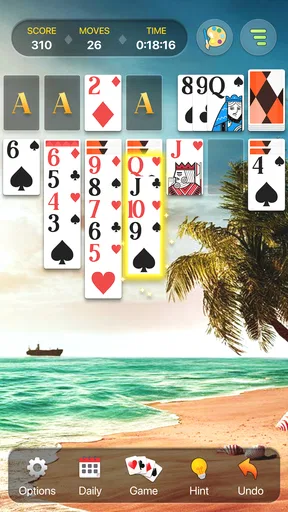
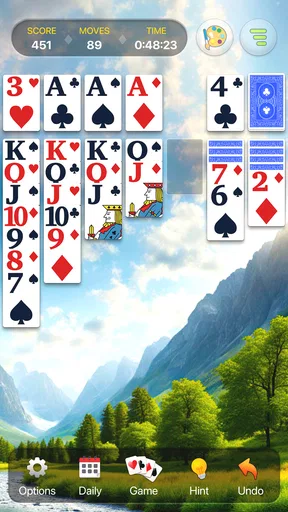
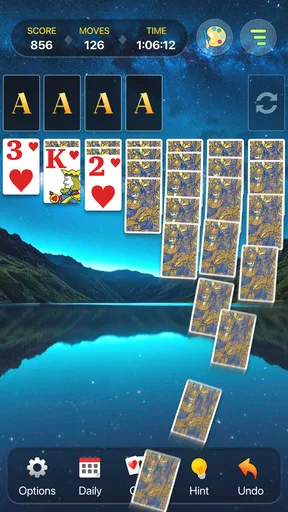
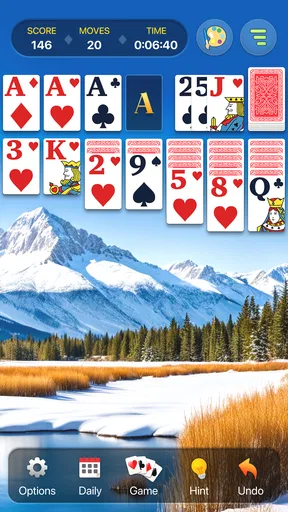
Our Review of Klondike Solitaire Card Game
 Analysis by Appyee
I usually know within a few days whether a solitaire game is going to stay on my phone or disappear after a few idle sessions. Klondike Solitaire Card Game made a good first impression because it keeps the familiar card layout at the center of the experience instead of surrounding it with unnecessary distractions. It is a free card game from FelicityGames, aimed at adults and seniors who want readable cards and a straightforward way to play Klondike solitaire.
That simplicity is the main reason to consider it. I can open it when I have a short break, play one deal without preparing for a complicated challenge, and stop without feeling that I have abandoned a larger game. At the same time, a simple solitaire app has to earn repeat use after the novelty disappears. My experience is that this one works best for people who value calm, familiar play and easy reading, while it is less convincing for anyone looking for deep progression, social competition, or a constantly changing card-game system.
How the first week feels in everyday use
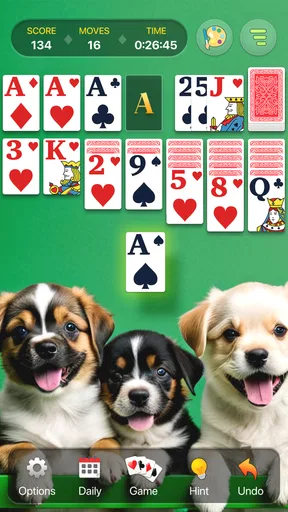
The opening experience is easy to understand. The game presents Klondike solitaire in the traditional way, so anyone familiar with arranging cards into descending alternating-color sequences will feel at home quickly. If you have not played much solitaire, the rules are still approachable because the objective is recognizable: uncover hidden cards, organize the tableau, and build the foundations by suit.
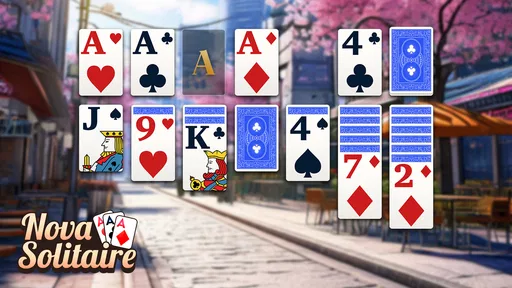
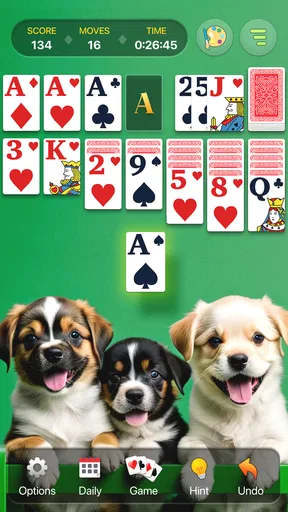
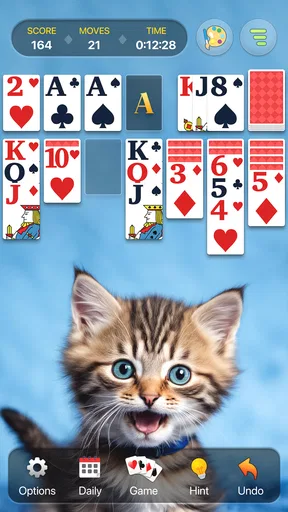
The large-card presentation is more important than it may sound. On a phone, small symbols and cramped stacks can turn a relaxing game into a visual chore. Here, the focus on big cards makes the layout more comfortable for older players and for anyone who prefers not to squint at a compact screen. I also found that larger cards help when playing in imperfect conditions, such as on a bus, in a waiting room, or with the phone held farther away.
During the first week, the strongest appeal is the low mental entry cost. I do not need to learn characters, memorize a map, or understand a long tutorial before enjoying a round. A short session can begin immediately, and the familiar rhythm gives the game a useful place in daily routines. It is a sensible choice for a morning coffee, a few minutes before bed, or a pause between larger tasks.
That convenience also reveals the first trade-off. Klondike is familiar precisely because it is not trying to reinvent solitaire. Players who want unusual rules may find the experience conservative. This is not the sort of card game I would choose when I want a dramatic campaign or a new mechanic to master. Its appeal comes from refinement and accessibility rather than surprise.
The free entry point makes trying it uncomplicated. The game is listed as free, although optional in-app purchases range from small amounts to considerably larger individual items. I would approach those purchases carefully. Solitaire does not require the same spending commitment as a competitive game, but the presence of a broad purchase range means I would avoid tapping through any offer automatically, especially when the goal is simply to enjoy occasional rounds.
The age rating is Everyone, which fits the non-violent, easy-to-understand nature of the game. That makes it suitable for a family tablet or for introducing a relative to a digital version of a classic pastime. Still, suitability is not the same as universal appeal. A child who needs constant novelty may lose interest quickly, while an adult who enjoys quiet repetition may find exactly the right pace.
Small habits that improve the early experience
One useful approach is to treat each deal as a short exercise in planning rather than racing toward the foundations. In the first few moves, I look for plays that expose a face-down card or create an empty tableau space. Moving a visible card to the foundation can feel productive, but it is not always the best immediate decision if that card is needed to uncover something underneath.
I also recommend pausing before every automatic-looking move. In Klondike, a legal move is not always a helpful move. If I send a low card away too early, I may remove the only way to build a useful sequence in the tableau. This is a small but meaningful distinction between tapping randomly and developing a repeatable playing style.
For players with weaker vision, the large cards are a practical advantage, but screen brightness and phone size still matter. On a smaller display, the tableau can remain visually busy even when the card faces are readable. I would test it in portrait and landscape orientations if the device supports both comfortably, then keep the orientation that makes the piles easiest to follow.
What remains enjoyable after the first month
After the initial familiarity wears off, the value depends on how much you enjoy the basic decision-making loop. I continued returning to it when I wanted a game that did not demand a long uninterrupted session. The appeal is not a dramatic reward at the end of each round; it is the quiet satisfaction of seeing a messy layout gradually become organized.
This makes the game particularly useful as a transition activity. I can use a round to step away from work without committing to a full entertainment session. It is also less socially demanding than a multiplayer card game. There is no need to coordinate with another person, wait for a turn, or feel pressure to perform in front of anyone else.
The month-to-month question is whether the basic deal structure gives you enough variation. Klondike naturally creates different openings and changing decisions, so the same rules do not always produce the same thought process. One game may reward opening a column early, while another asks for patience and careful use of the stock. That variation can sustain a regular habit for people who like solving familiar patterns in slightly different ways.
However, I would not confuse replayability with endless content. If you need a constant stream of new modes, events, opponents, or collectible goals, this game may feel thin over time. Its recurring value comes from the activity itself, not from a large outside structure. That is a strength for players who dislike clutter, but a weakness for anyone who measures longevity by unlocks and novelty.
The published average rating is 4.9 from around 26 thousand ratings, and the game has passed half a million installs. Those figures suggest that the accessible presentation resonates with a substantial audience, especially among people who want a familiar solitaire format. They do not guarantee that every player will enjoy the same restrained design, but they do support the impression that the straightforward approach is not an accidental choice.
Keeping the habit without turning it into a chore
My preferred way to use this game is to set a natural stopping point before opening it. One deal during a break feels refreshing; repeatedly starting another round because the previous one ended can make the activity feel less relaxing. The game is at its best when it fills a small gap rather than taking over the entire evening.
A second useful habit is to review why a round failed instead of immediately blaming luck. Sometimes I have spent a needed card too soon, delayed uncovering a hidden card, or used an empty column without a clear follow-up. Thinking through that mistake gives the next session a purpose and keeps the game from becoming pure tapping.
For seniors or anyone returning to solitaire after years away, I would begin slowly and focus on readable card placement rather than speed. The large-card design supports that approach. For experienced players, I would use the same game as a compact daily puzzle, but I would keep expectations realistic: it is a polished version of a classic, not a complete replacement for every type of card entertainment.
Where long-term use becomes less comfortable
The maintenance burden is low in the practical sense. This is a focused game, so there are fewer systems to learn, fewer menus to manage, and less pressure to check in constantly. The current version is 3.23.07 and requires Android 10 or later, which is worth checking before installing on an older device. For compatible phones and tablets, the basic setup should suit people who want an uncomplicated pastime rather than an app that demands regular attention.
There is still a maintenance question beyond updates: how much patience do you have for the same core activity? A solitaire game can remain installed for years and be used only occasionally, which is perfectly reasonable. But if you expect every session to feel fresh, the absence of broader variety may gradually become noticeable. The app asks very little from the player, yet it also gives less back to someone who wants a sense of long-term progression.
Purchase prompts can also affect the feeling of simplicity. Even when I intend to play for free, seeing optional items can interrupt the clean, old-fashioned character that makes the game appealing. I would not call that a reason to reject it outright, but it is a reason to pay attention during setup and play. A calm card game should not encourage careless spending simply because a player is trying to finish a round.
Another possible source of fatigue is the visual repetition. The large cards improve readability, but they do not change the fact that the screen is built around the same tableau, stock, and foundation structure. That is ideal for recognition and ease of use. It can also make the game feel static to players who need stronger visual variety.
The game is not the right choice if your main goal is to play against friends, compare performance on a shared leaderboard, or explore several distinct solitaire variants in one place. In those cases, a broader card collection or a dedicated multiplayer alternative would probably serve you better. I would also look elsewhere if I wanted a story, strategic deck construction, or a sense of character development.
On the other hand, many alternatives create their own friction through dense interfaces, aggressive progression systems, or an emphasis on speed. That is where this title has a clear advantage. Its identity is easier to understand: open it, play Klondike, and leave when you are done. For a relative who finds modern games confusing, that directness may matter more than a long list of features.
Who is most likely to keep it installed?
I think it earns lasting space for three kinds of players. The first is the traditional solitaire fan who wants a readable mobile version without having to learn a new ruleset. The second is the casual player who needs a quiet five- or ten-minute activity during everyday gaps. The third is an older user who values large cards and a familiar visual structure over novelty.
It is also a reasonable choice for a shared household device. Because the content rating is Everyone and the rules are widely known, a family member can pick it up without a long explanation. One person may use it as a daily mental break, while another may open it only during travel or waiting periods. That flexible level of commitment is one of its strongest long-term qualities.
I would be more cautious about recommending it to someone who quickly exhausts repetitive games. If you usually need new challenges, competitive pressure, or frequent content changes to maintain interest, the first-week comfort may not survive the month. The same simplicity that helps a beginner start can leave an experienced variety-seeker wanting more.
My long-term verdict
After the novelty fades, this Klondike game remains useful because it does not depend on novelty in the first place. Its lasting value comes from a familiar ruleset, readable cards, and sessions that fit naturally into ordinary life. I can imagine keeping it installed for months and opening it whenever I want a quiet activity that begins immediately and ends cleanly.
That recommendation has limits. I would not install it expecting a deep progression system, a social card room, or a large collection of radically different experiences. I would also keep an eye on optional purchases and avoid spending simply to extend a casual session. The free version is the sensible starting point for judging whether the game belongs in your routine.
My final view is favorable, especially for adults and seniors who want accessible Klondike solitaire with large, easy-to-read cards. FelicityGames has chosen a narrow purpose and, in my experience, the game benefits from that focus. It is not an exciting discovery for players chasing constant change, but it is a dependable companion for short breaks, quiet evenings, and anyone who still enjoys the simple satisfaction of turning a scattered deck into an orderly finish.
Verdict
Strengths of Klondike Solitaire Card Game
- Simple rules make it easy for beginners to start playing.
- Offline mode lets you enjoy games without an internet connection.
- Quick rounds are well suited to short breaks or casual sessions.
- Daily challenges add variety beyond standard solitaire games.
- Smooth card controls make moving and arranging cards intuitive.
Limitations of Klondike Solitaire Card Game
- Frequent ads may interrupt play, especially between rounds.
- Some advanced features may require in-app purchases.
- Limited social options reduce interaction with other players.
- Random deals can occasionally feel repetitive over long sessions.
- Battery use may increase during extended gameplay sessions.
Other Releases by FelicityGames
View All
Solitaire Zen - Cards Master
Card4.8
Similar Picks in This Category
View All
Solitaire - Classic Card Games
MobilityWare4.6

UNO!™
Mattel163 Limited4.3

Spider Solitaire: Card Games
MobilityWare4.6

Solitaire.com - Classic Cards
Tripledot Studios Limited4.7

Plants vs. Zombies™ Heroes
ELECTRONIC ARTS4.1

Hearthstone
Blizzard Entertainment, Inc.4.1
Frequently Asked Questions
What is Klondike Solitaire Card Game, and how is it played?
Klondike Solitaire Card Game is a digital version of the classic single-player card game commonly known as Patience. The objective is to move all cards to four foundation piles, arranged by suit from Ace through King. During a game, you organize cards in descending order with alternating colors, reveal hidden cards, and use the stock and waste piles strategically to continue building valid sequences.
Can I play Klondike Solitaire Card Game without an internet connection?
In most cases, Klondike Solitaire Card Game can be played offline once it has been installed, making it suitable for travel, commuting, or places with limited connectivity. However, certain features may require an internet connection, including advertisements, cloud synchronization, online statistics, daily challenges, or leaderboard updates. It is worth checking the app’s specific requirements before relying on it completely offline.
Does Klondike Solitaire Card Game offer different difficulty levels or game modes?
The game commonly includes several ways to make solitaire more interesting, such as draw-one and draw-three modes, different scoring systems, timed games, daily challenges, and selectable difficulty settings. Draw-three generally requires more planning because fewer cards are immediately available. The exact selection can vary by version, so players should review the in-app menu to see which modes and challenges are included.
Is Klondike Solitaire Card Game free to download, and does it contain advertisements?
Klondike Solitaire Card Game is typically free to download, but the free version may be supported by advertising. Players can usually expect banner ads, interstitial advertisements between rounds, or optional rewarded videos that unlock hints or bonuses. Some versions offer an in-app purchase to remove ads or access extra themes and features, so checking the store listing and purchase details is recommended before downloading.
What permissions and device features does Klondike Solitaire Card Game require?
A basic solitaire game normally needs only standard permissions required for installation and advertising services, rather than access to sensitive features such as contacts, messages, or the camera. Depending on the developer, the app may request network access for ads, analytics, cloud saves, or leaderboards. Before installing, review the Google Play or App Store privacy information to understand how data may be collected and used.
Play our best games!


